
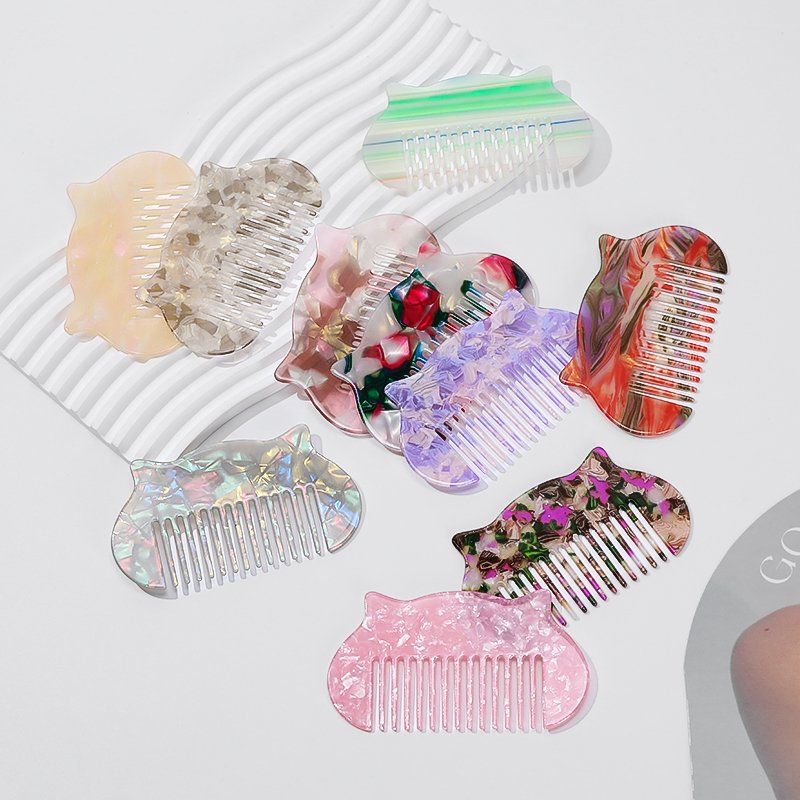
Give each quoted comb a shape reference before assigning its pattern or colour. Ask the supplier to confirm whether the photographed versions share one outline and tooth layout or represent different physical articles. Zanbeiya’s official comb card shows several patterned cat-silhouette combs. That image is a useful starting point for an assortment schedule, but it does not establish that all pictured versions have identical dimensions or are supplied together. Define the physical item first, then specify its decorative version and quantity.
Separate the physical comb from its surface pattern
A buyer may describe a version as pink, striped or floral, while the supplier identifies products by shape or mould reference. Those systems can both be useful, provided the enquiry connects them. Ask for a supplier item reference and link it to a clearly labelled photograph. Keep a separate field for the requested pattern. This prevents a pattern name from being used to identify an item whose outline or tooth arrangement has not been confirmed.
Use the product link with the official catalogue-card image when making the enquiry. Product titles can be broad descriptions of a family and should not replace the actual item reference. In this case, the visible cat-like outline is a concrete way to identify the image you mean. Ask the supplier to confirm that the photograph and linked product correspond to the offered version before discussing a mixed assortment or allowing substitutions.
Build a two-part identity for every assortment line
Identity field | What to request | What it controls
Physical item reference | Supplier code linked to a named shape photograph | Which article is being quoted
Outline reference | Front view showing the complete perimeter | Whether a proposed alternative changes the shape
Tooth-layout reference | Clear view with measurement definition if required | Whether the physical layout matches the selected item
Decorative version | Pattern or colour reference for that item | Which surface appearance is requested
Quantity allocation | Count for each physical item and pattern pair | What the mixed assortment contains
Substitution rule | Changes requiring buyer confirmation | Whether an alternative may replace an approved line
Keep each physical item and decorative version as an identifiable pair. If two patterns are available on one shape, they can share the shape reference while retaining separate quantity rows. If a pattern is offered on a different shape, add a separate alternative line. Do not combine an appealing pattern photograph with an assumed physical specification from another product and expect the supplier to infer the intended hybrid.
Ask what is fixed within the decorative reference
Patterned surfaces may show variations in the position of a motif or colour transition. Ask the supplier which aspects of a decorative reference can be specified and which may vary across pieces. If the location of a particular motif matters to the buyer, state that requirement and request a proposal. Avoid assuming that every swirl or translucent effect in a photograph is reproduced in the same position on every supplied item.
Keep that question separate from material verification. A photograph can show a pattern and a catalogue can give a material description, but neither should be treated as independent proof of a particular composition, grade or performance. Do not infer anti-static properties, durability, scalp effects or suitability for a particular hair type from the image. Ask for the applicable product specification or evidence separately if those attributes are needed for the purchase.
Define the assortment without counting the display photo
A photograph containing several combs may show available examples rather than a packaged set. Ask which physical items and decorative versions can be supplied, then request quantities for each agreed pair. State whether you want individual selection or a supplier-proposed mix. An equal split should be an explicit request and confirmation, not a conclusion drawn from how many examples appear in the photograph.
Ask whether the proposed mix remains fixed for a repeat order or is subject to confirmation each time. If availability changes, request the exact replacement reference before approving it. A written substitution rule can distinguish a different pattern on the same item from a different physical shape. That distinction helps a retailer maintain product descriptions and helps receiving staff identify whether an offered alternative matches the approved scope.
Connect samples, quantities and packing references
Identify each sample by its physical item and decorative version. Compare its outline and tooth layout with the confirmed reference, and request clarification when something differs. If dimensions matter, ask the supplier to name the measurement points and units rather than estimating them from the sample photograph. Keep any sample that represents an alternative clearly labelled so it is not mistaken for approval of a different assortment line.
Once the item map is clear, request the proposed sales-unit and carton arrangement for the exact assortment. Ask how the selected references are identified in packing information. Confirm current minimum quantities, prices, availability and timing for that defined mix. For an overseas destination, state any required information language and labelling details. Approval of an assortment photograph alone does not approve those commercial or documentation requirements.
FAQ
Does the catalogue photograph show a set sold together?
It shows product references. Ask whether the supplier offers them as individual items, a fixed set or a proposed assortment, and obtain the exact quantity allocation in the quotation.
Can two patterns use the same physical item reference?
They can if the supplier confirms the same shape and tooth layout. Keep separate decorative references and quantities so the requested mix remains unambiguous.
What if the supplier offers another colour on a different shape?
Record it as a separate alternative rather than a silent colour substitution. Ask which physical and decorative references change, then approve or decline that specific offer.
What is the clearest repeat-order instruction?
Provide the confirmed item-and-pattern schedule, quantity allocation and sample references. Ask the supplier to identify any proposed change before quoting so a familiar assortment name does not conceal a different supplied mix.
Product reference and enquiries
Product reference: https://zbyclips.com/product/korean-style-minimalist-fashion-hair-comb-long-comb-for-women-dormitory-amp-bedroom-use-anti-static-vintage-hairdressing-comb/
Catalogue source: https://zbyclips.com/
Contact Zanbeiya Clips: https://zbyclips.com/contact/
More buyer articles: https://zbyclips.com/blog/